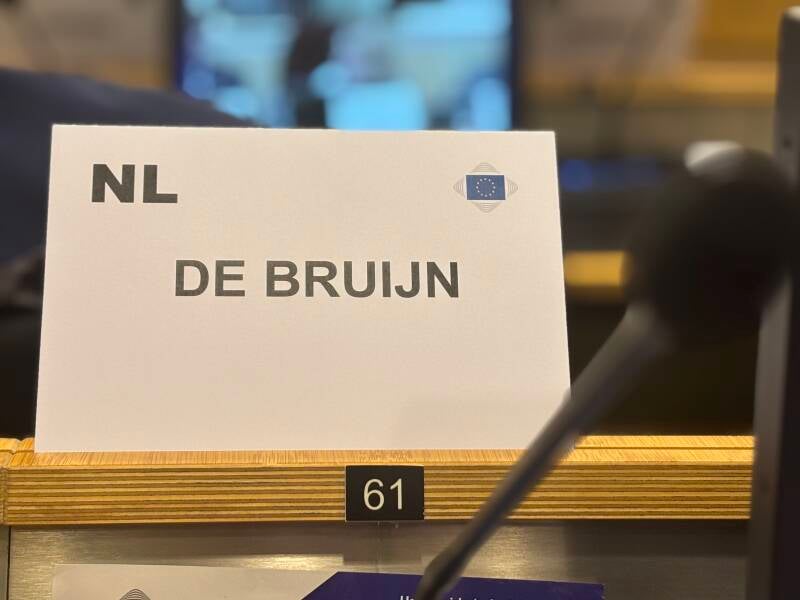
Today, I attended the SEDEC Commission of the European Committee of the Regions to discuss two important topics: the adoption of the CoR opinion on the EU Startup and Scaleup Strategy, and an exchange of views on the Erasmus+ programme for the 2028–2034 period.
On the EU Startup and Scaleup Strategy
I thanked the rapporteur for integrating many of the points I raised during the previous SEDEC meeting, including the need to strengthen regional innovation ecosystems, reduce administrative burdens through a deep-tech fast track, and progress on completing the Capital Markets Union with a European co-investment vehicle.
I also stressed that Europe is losing ground in key technologies such as quantum and biotech. However, I welcomed the European Commission’s recent efforts, including the initiative launched on 28 October 2025 to establish the Scaleup Europe Fund—an important multi-billion-euro instrument for deep-tech investment.
For Europe’s long-term competitiveness, I underlined the importance of breakthrough technologies in areas such as health, space, unmanned systems, and quantum. For this reason, I expressed my support for amendments 18r and 18.
While several amendments focus on assisting rural and less-developed regions—which I fully understand—I also stressed the importance of supporting Europe’s existing top performers so they can remain competitive with the US and Asia. Europe must lead in fields like health, space, drones, and quantum if we want to stay globally independent.
Overall, we are satisfied with the opinion and with the Startup and Scaleup Strategy itself.
On the Erasmus+ Programme 2028–2034
Our region welcomes the proposed Erasmus+ budget increase to €40.8 billion. However, I expressed concern that this will not be sufficient to meet the programme’s significantly expanded ambitions, especially as its share of the overall EU budget declines.
I highlighted five key points:
-
Budget adequacy – The expanded scope of Erasmus+ requires a higher and more transparent budget.
-
Learning mobility – Demand from students and staff continues to grow, but funding limitations prevent many from participating.
-
International partnerships – Strong cooperation with Partner countries beyond Europe remains essential.
-
Flagship initiatives – Erasmus Mundus, Jean Monnet, Capacity Building and the European University Alliances need stable, long-term funding, as do the Teacher Academies.
-
Inclusion – Structural funding and practical simplification are crucial to ensure accessibility for all participants.
Finally, I urged the Commission and Member States to reassess the proposed funding levels so that Erasmus+ can continue to function as Europe’s flagship programme for education, mobility and international cooperation.
Reactie plaatsen
Reacties